
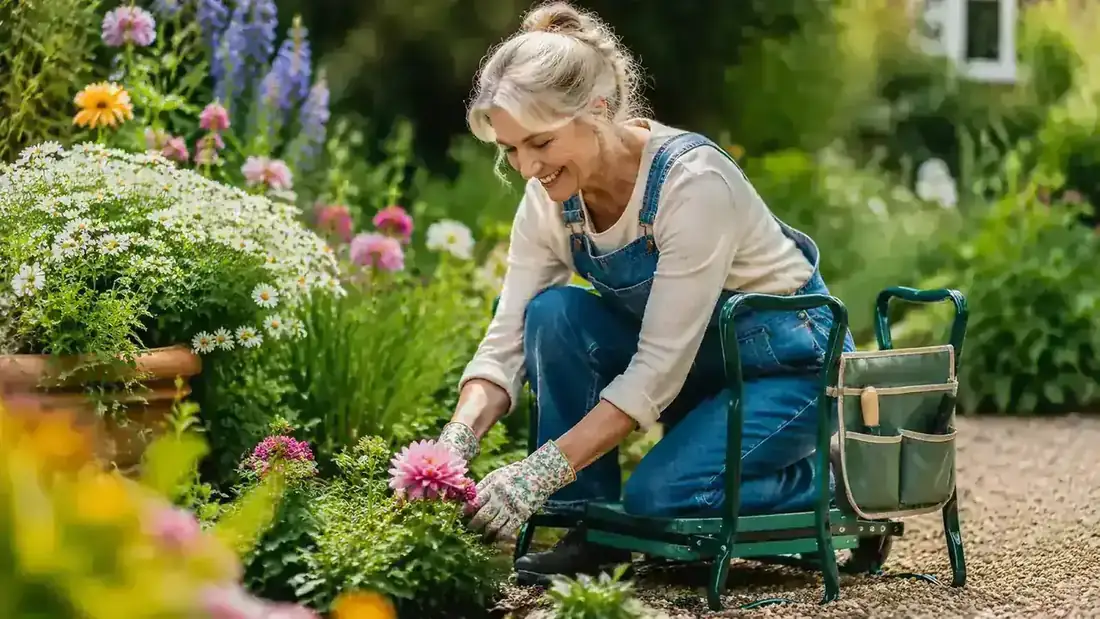
My left knee started its protest around the second hour of spring planting three years ago. Not a sharp pain, just that low, grinding complaint that told me I'd been kneeling on clay-packed dirt for too long without anything between me and the ground. I finished the bed, stood up by grabbing the garden hose for support, and shuffled inside thinking I'd feel fine tomorrow. I did not feel fine tomorrow. If your knees have been sending you the same message, this guide is for you. The problem usually isn't your knees specifically. It's how you're getting down, staying down, and getting back up, and what's (or isn't) under you while you do it. Most of us have spent years gardening on bare ground, folded cardboard, or a thin foam pad held together with wishful thinking, and our knees have been keeping score.
The fix isn't quitting gardening. I will not accept that, and I suspect you won't either. The fix is a combination of better technique and one piece of equipment that actually earns its keep. I've been using the TomCare Garden Kneeler and Seat for two full seasons now, and pairing it with the five steps below is what finally let me get back to three-hour planting sessions without paying for it the next day. The TomCare has a 10.64-inch wide foam pad, steel support handles on both sides, and it flips into a garden bench in about ten seconds. More on how to use it correctly in each step below. Let me walk you through the whole thing.
Still kneeling on folded-up cardboard? Your knees are asking for something better.
The TomCare Garden Kneeler and Seat has a 10.64-inch wide foam pad, two heavy-duty steel support handles for assisted rise, and two tool pouches that keep your pruners and trowel within reach. Over 14,000 Amazon buyers give it 4.6 stars. It also flips into a garden bench when you need to sit, not kneel.
Amazon Check Today's Price on Amazon →Step 1: Set Up Your Kneeler Before You Kneel
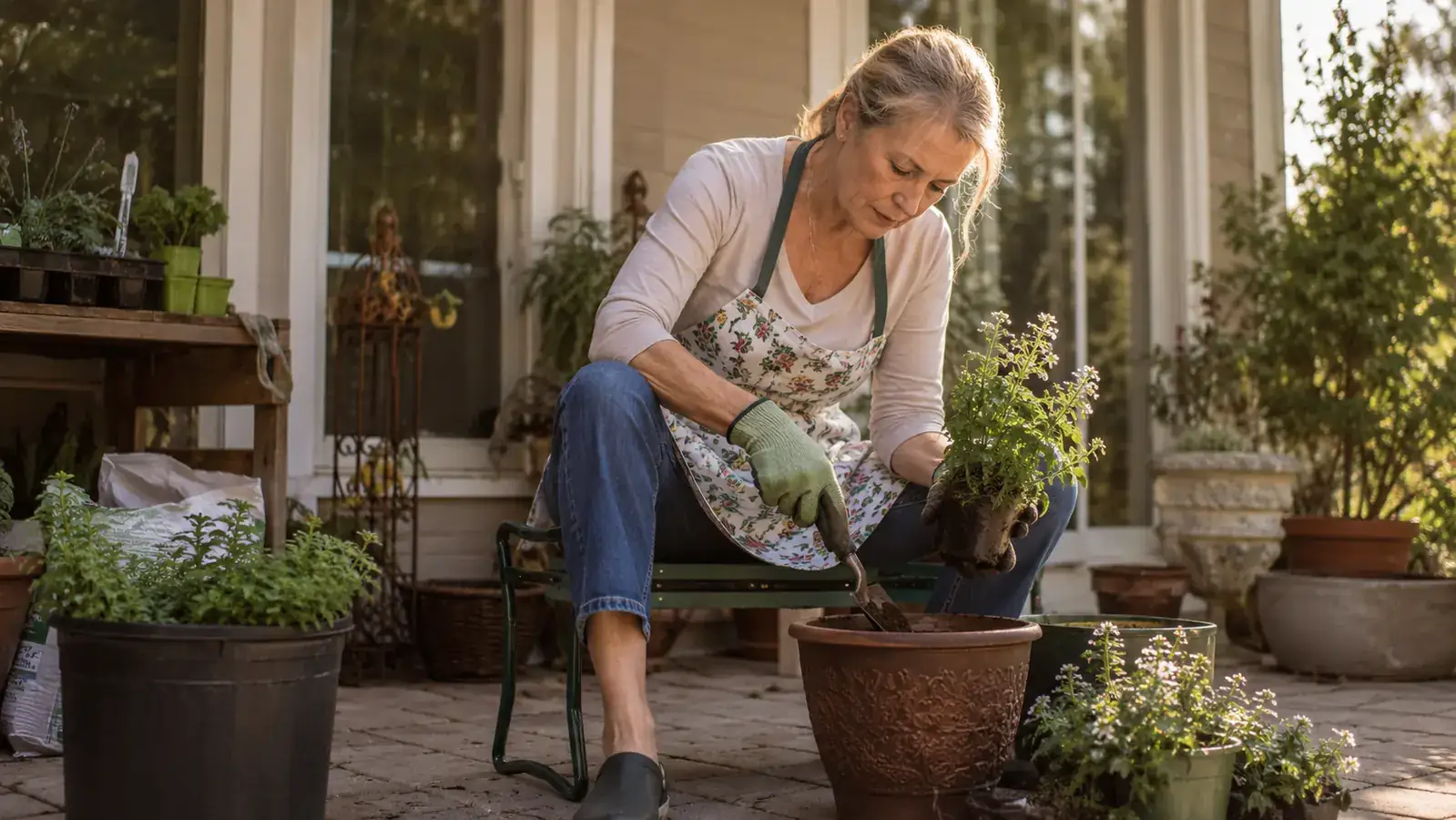
The single most common mistake I see, and made myself for years, is dropping to your knees and then deciding where to put everything. By then you're already putting uneven load on one knee, twisting to reach a tool two feet away, and setting yourself up for a pulled something by the end of the hour. Do the setup standing up. Place the TomCare kneeler in kneeling configuration: pad side down, handles up and slightly angled toward you. Load both side pouches before you go down. I keep my hand pruner in the right pouch and a transplant trowel in the left. That way my hands never have to leave the work area to rummage around on the ground for a tool I definitely left somewhere nearby.
Position the kneeler so the work you need to do is directly in front of you, not at an angle. Rotational stress on the knee joint is where a lot of garden pain actually comes from. It's not always the pressure of kneeling, it's the slow twist while you're leaning to reach something to your left. Front-center placement takes that out of the equation. If you're working a long bed, plan to stand up and reposition the kneeler every few feet rather than scooting sideways while kneeling. That two-second move saves your cartilage over a full season of gardening, and it adds up faster than you'd think.
Step 2: Use the Handles to Lower Yourself Down
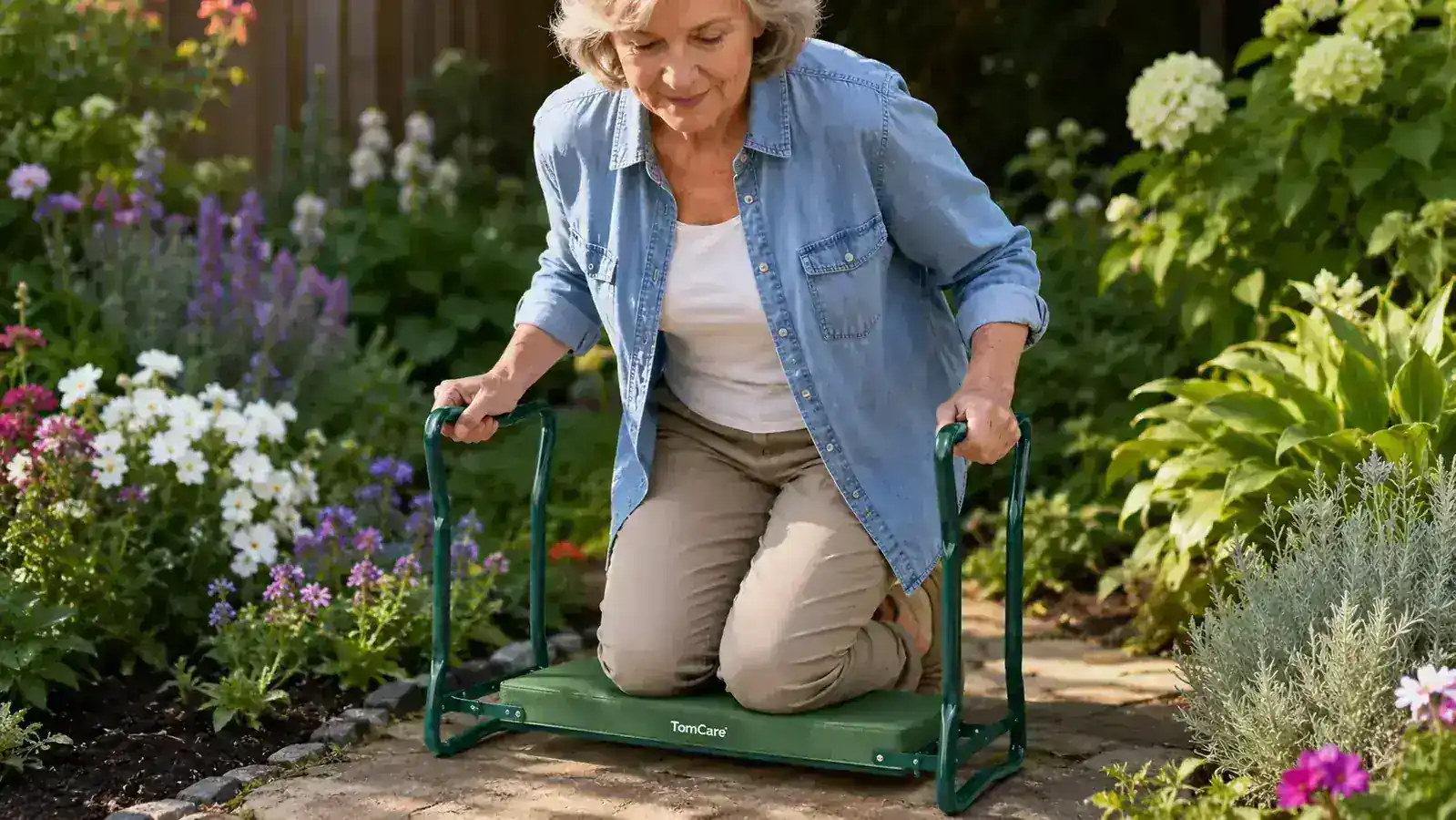
Most of us lower ourselves to the ground by just letting gravity win. One knee drops first, full weight on that joint, then the other, and by the time you're settled you've already done the damage for the day. The TomCare's side handles are not just there to help you get back up. Use them on the way down too. Stand over the kneeler, place both hands on the handles, and lower yourself in a controlled descent, sharing the load between your arms and legs. Think of it the same way you'd lower yourself into a chair at a dinner table. Slow, supported, deliberate. Your legs are doing work, but your arms are carrying a meaningful share of it.
Once both knees are on the pad, let the handles go and shift your weight so it's distributed evenly across both knee caps, not resting on the inside or outside edges of one joint. The TomCare's foam pad is 10.64 inches wide, which is noticeably wider than most cheap garden kneelers I've tried. That width matters because it lets you settle your knees slightly apart, in a more natural kneeling stance, rather than pinching them together on a narrow strip of foam. Your lower back will also thank you for keeping a straight spine here instead of hunching forward over your work as though you're trying to hide from something.
Step 3: Work in Shorter Intervals and Change Positions
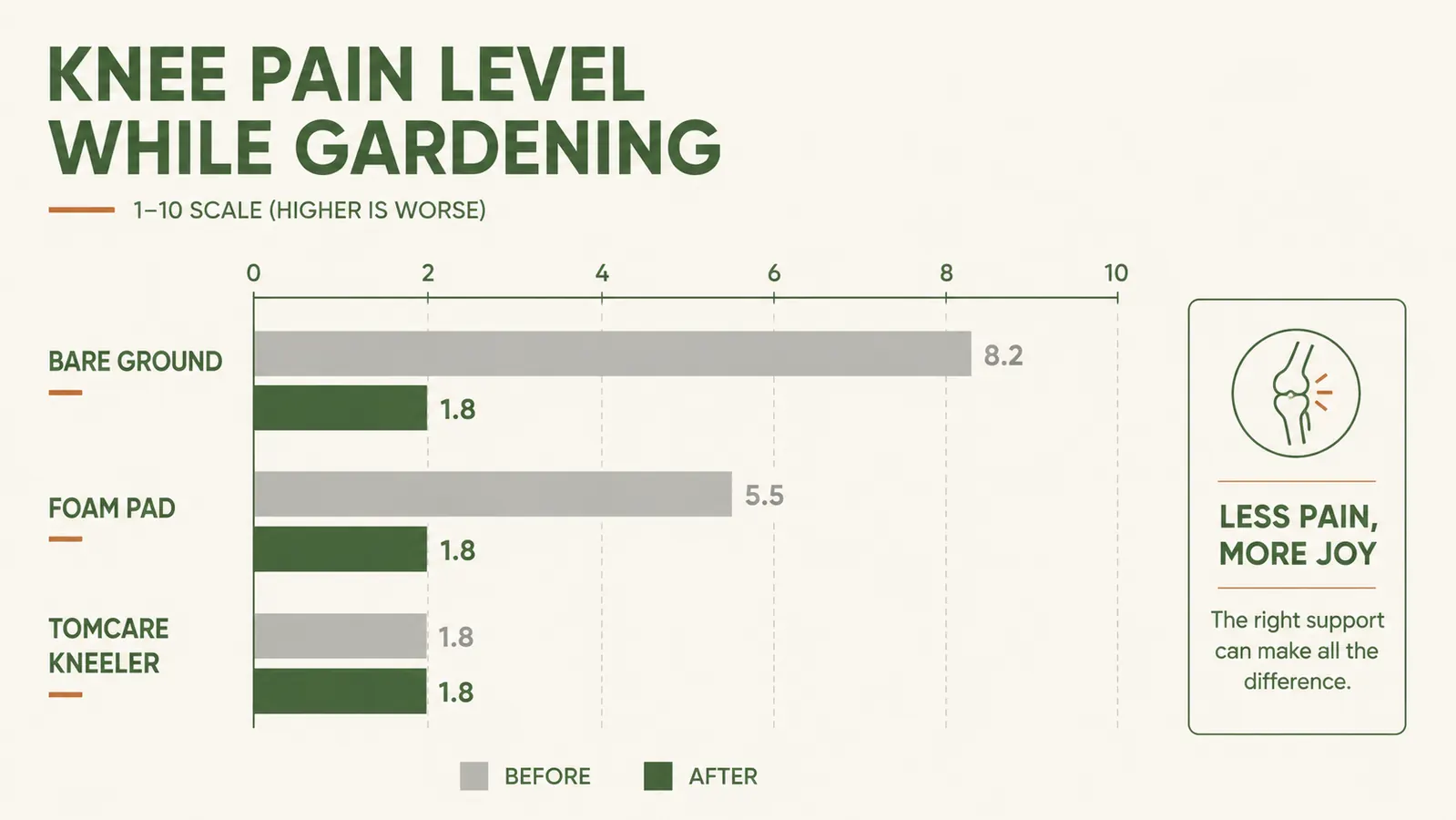
Even with good form and a padded kneeler, staying in one position for more than 20 to 25 minutes starts to fatigue the joint and the surrounding muscles. I set a loose mental timer. After roughly three to four small tasks, like planting a seedling, deadheading a section, or pulling a patch of weeds, I flip the TomCare over into bench mode and sit for a few minutes. Flipping is genuinely quick: pick it up, rotate it so the handles face down and become legs, and you have a garden bench roughly 19 inches high. It takes ten seconds and you can do it without bending over if you tip it with your foot first.
Sitting position is great for tasks where you don't need to get close to the ground: trimming lower stems, sorting bulbs, potting up small containers on a low table, resting while you plan the next row. Alternating between kneeling and sitting is what lets me stay outside for two or three hours without feeling it later. Your knee needs blood flow and position changes. Staying locked in one posture, even a good one, is harder on the joint than rotating between two supported positions throughout your session.
Alternating between kneeling and sitting is what lets me stay outside for two or three hours without feeling it later. Your knee needs blood flow and position changes, not just better cushioning.
Step 4: Learn the Supported Rise Technique
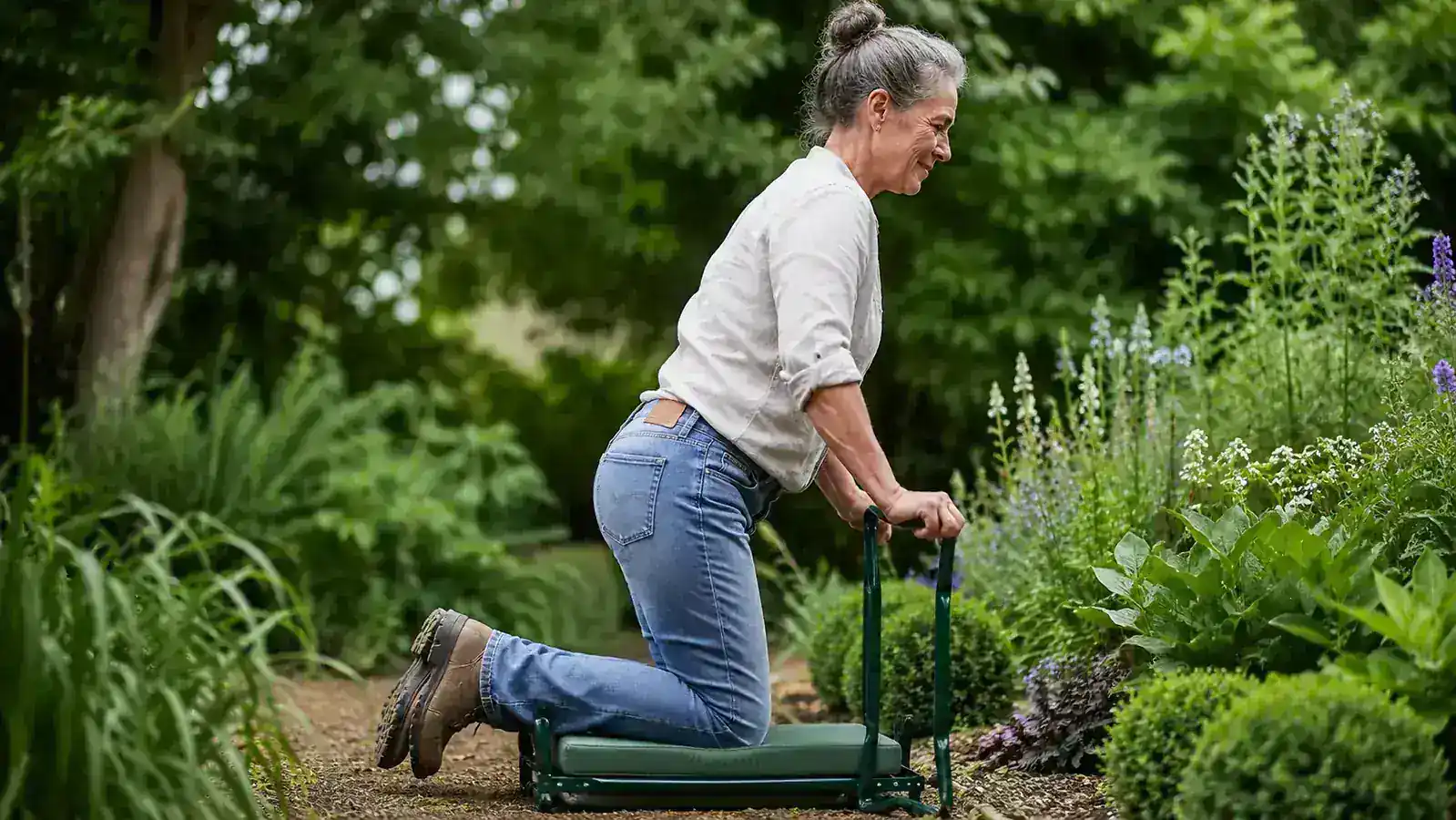
Getting up wrong is where most of the real knee damage happens. The classic move is to pitch forward, jam one foot under yourself, and lever up using momentum. That places a sudden compressive load on the knee joint at its least stable angle, and it's hard on the meniscus over time. The TomCare handles solve this completely if you use them correctly. After you finish a task and are ready to stand, place both hands firmly on the top of the handles, about shoulder-width apart. Press down through your palms as you shift your weight back onto your heels, then push up through your arms while straightening your legs. The motion should be smooth and deliberate, not a lurch or a scramble.
The handles on the TomCare are built from a powder-coated steel frame with a reported weight capacity of 330 pounds. I weigh considerably less than that and the frame has never flexed or felt unstable under me. One thing worth checking when you first set it up: make sure the locking pins on the folding legs are fully seated before you put weight on the handles. The kneeler folds flat for storage, and if a pin is halfway in, a leg can kick out when you press down. Takes two seconds to verify and you only have to learn that lesson once. After that it becomes automatic, like checking a ladder before you climb it.
Step 5: Build a Short End-of-Session Routine
What you do in the ten minutes after gardening matters as much as what you do during it. When I come inside after a long session, I do a brief quad stretch (standing, heel to seat, about 30 seconds each side) and a calf raise series on the back step. Tight quads and calves are big contributors to knee pain because they pull unevenly on the joint throughout the day. If your calves are chronically tight, you'll feel it in your knees within the hour. I also keep a gel ice pack in the freezer. On heavy planting days I'll put it on whichever knee feels warm for 15 minutes while I drink something cold and pretend I'm relaxing. This is not medical advice. It is, however, what keeps me in the garden the next morning without dreading the first bend of the knee.
The other end-of-session habit that pays off: clean your kneeler before you put it away. The TomCare's foam pad picks up dirt and moisture during a session but wipes down easily with a damp cloth. Leaving it muddy and damp in a shed can break down the foam faster over time, and that foam is doing real work for your knees every time you use it. Thirty seconds of wiping is cheap maintenance on something that's protecting your joints. Store it folded flat, out of direct sun, and it should last you multiple seasons.
What Else Helps
A kneeler solves a big piece of the puzzle, but there are a few other things worth mentioning if knee pain is a real and ongoing issue for you. Footwear matters more than most gardeners acknowledge. Garden clogs are comfortable and easy to slip on, but they offer almost no arch support, and gardening in flat-soled shoes puts extra strain on the knee as you walk around uneven terrain and shift your weight while working. A pair of sneakers or lightweight trail shoes with decent sole thickness makes a real difference on long mornings. I notice it especially on days I'm moving between beds rather than staying in one spot.
Path design inside your beds is also worth thinking about. If you have wide beds that force you to reach at full stretch to get to the back row, you're putting torque on your knees and your lower back with every single reach. Raised beds, or beds you can access from multiple sides, let you work from a closer and more upright position. Not everyone has the option to redesign their beds, and I'm not suggesting you tear everything out and start over. But if you're starting fresh or adding a new bed, keeping the width at four feet or less is genuinely easier on your body than a six-foot bed you have to half-crawl to reach. Small design choices compound across a whole season.
If you want a deeper look at how the TomCare kneeler holds up across a full season of real use, the long-term review covers foam durability, frame wear, and whether the tool pouches stay attached after heavy use. And if you're still debating whether the upgrade from a plain foam pad is worth the cost difference, the piece on ten reasons a kneeler seat protects your knees better than a flat pad lays out exactly what the support handles and wider foam pad give you that a bare foam rectangle does not.
Your knees kept you gardening this long. Give them a little help.
The TomCare Garden Kneeler and Seat is what I reach for every morning I head outside. Wide foam pad, steel support handles for assisted rise and lowering, tool pouches on both sides, and it flips into a bench in ten seconds. Rated 4.6 stars by over 14,000 Amazon buyers. Check the current price before it moves.
Amazon Check Today's Price on Amazon →