
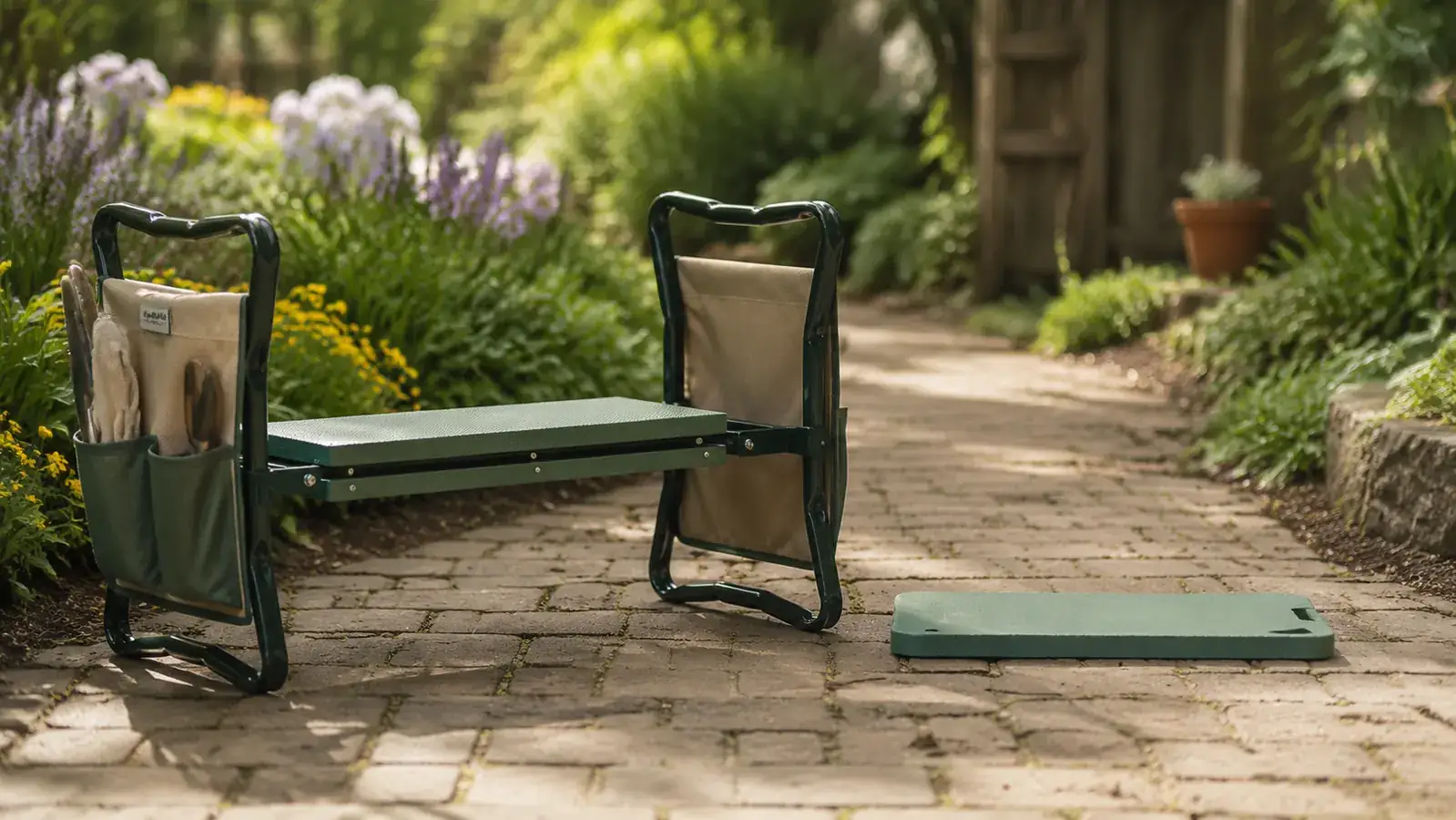
I want to be honest about how long I used a plain foam kneeling pad. Six years. Bought a new one every spring because the old one had either split down the middle, absorbed enough clay-mud to weigh four pounds, or gotten lost somewhere in the shed. Each one cost about budget price. So over six years I probably spent a modest total defending my knees with what is basically a repurposed yoga block. Then I tried the TomCare Garden Kneeler and Seat, which runs in the mid range, and I had to have a small, private argument with myself about why I had waited so long.
If you are trying to decide between a plain foam kneeling pad and a proper garden kneeler seat, you are in the right place. This comparison covers what each one actually does for your knees, your back, your tool situation, and your dignity when you need to stand back up after forty-five minutes of weeding in the squash bed. Both have real uses. But they are not interchangeable, and for most gardeners who do regular ground-level work, the math on the cheap option is worse than it looks.
| TomCare Garden Kneeler Seat | a Plain Foam Kneeling Pad | |
|---|---|---|
| Padding Thickness | 10.64" wide padded kneeling surface, thick EVA foam core backed by a rigid frame | Typically 1 to 1.5 inches of thin foam, compresses under body weight on hard ground |
| Frame and Structure | Powder-coated steel tube frame, rigid and stable on uneven ground and clay soil | None. Foam only. Conforms to whatever surface is beneath it. |
| Seat Mode | Flips over into a low garden bench seat rated to 330 lbs | Not possible. One position only: flat on the ground. |
| Getting Up Assist | Two padded side handles to grip and push from when rising from the ground | No handles. Push off bare ground, your thigh, or a nearby fence post. |
| Tool Storage | 2 large zippered Oxford-fabric side pouches hold trowels, gloves, seed packets | None. Tools rest on the ground beside you. |
| Weather Resistance | Oxford fabric pouches and powder-coated steel frame resist moisture and mud | Foam absorbs water and mud; can smell or degrade if left outside in wet conditions |
| Durability | Steel frame and durable fabric; holds up over multiple seasons with normal use | Foam flattens, splits, or cracks within 6 to 12 months of regular use |
| Weight and Portability | About 4.4 lbs; folds flat to carry or store in a shed or garage | Under 1 lb; fits under one arm or in a tote bag |
| Current Price | Check today's price on Amazon | Budget-friendly, varies by size and brand |
Where the TomCare Wins: The Flip-to-Seat Feature and the Handles
The thing that changed my mind about the TomCare was not the padding, even though the padding is genuinely better. It was the handles and the flip. When you are done kneeling on it, you flip the frame over and it becomes a low seat. So instead of crouching down to weed, you are sitting at a reasonable height, like a person, pruning things that are close to the ground without your lower back staging a formal protest. It sounds like a minor thing until you use it for an hour and realize you could have been doing this for years.
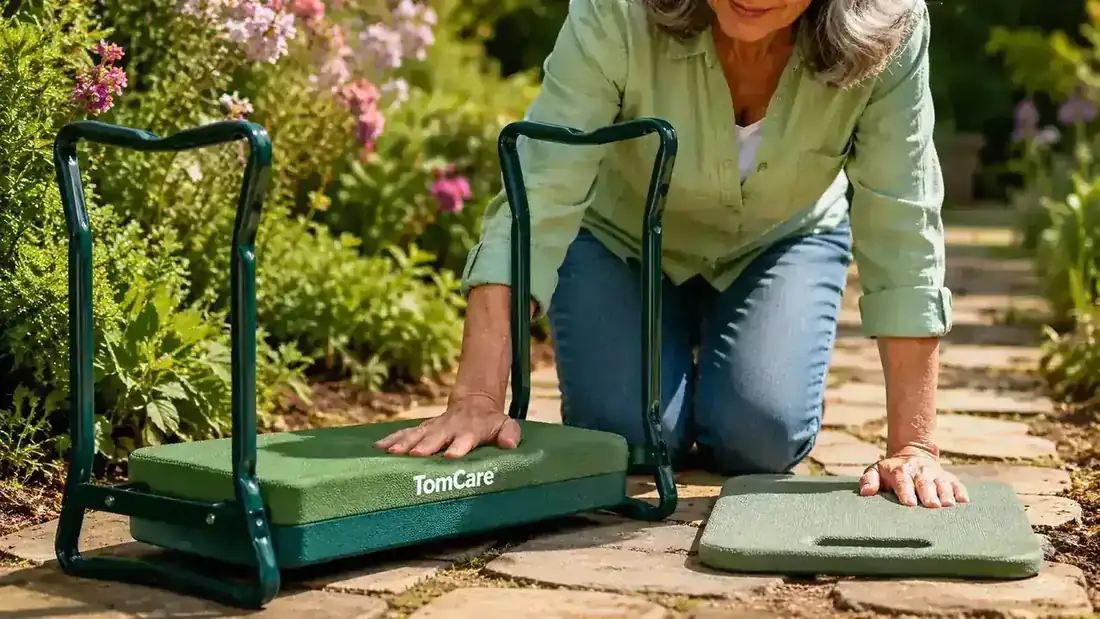
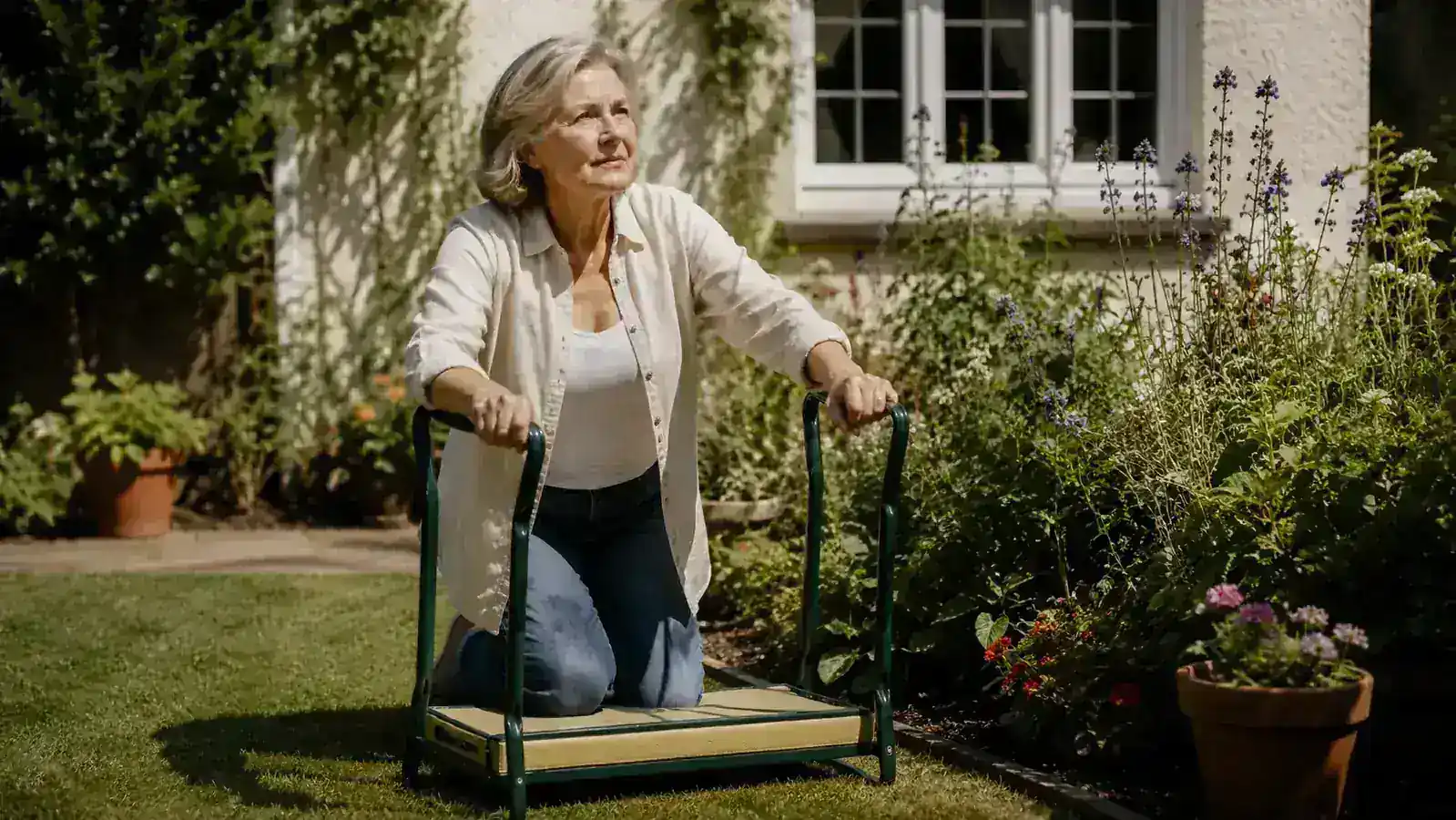
The handles are the other piece that a foam pad simply cannot replicate. Getting up from a kneeling position on a flat pad means pushing off bare ground with your hands, or levering yourself off one knee first, or doing the thing where you silently accept that you are going to be on the ground for a few more seconds while you figure out your limbs. The TomCare's padded handles let you grip both sides and push straight up, which puts almost none of the load on your knees during the rise. If you have any knee tenderness, arthritis flares, or just that general stiffness that comes with spending your forties in a garden, this matters more than padding thickness.
The seat mode is something I use more than I expected. There are whole categories of garden tasks where you do not need to kneel at all. Transplanting seedlings into a low raised bed, dead-heading along a border at ankle height, picking cherry tomatoes off the bottom of the plant. For all of those, flipping the TomCare into bench mode means you are working comfortably at low height without your knees touching the ground once. A foam pad gives you exactly zero help with any of that.
Where the TomCare Wins: Tool Pouches and the Trowel You Can Actually Find
The two side pouches are a quality-of-life upgrade I did not expect to care about. But every gardener knows the feeling of setting down their trowel in the bed, then moving down a row, then spending three minutes scanning the soil trying to find it. Everything that is in your hands when you kneel becomes a thing you have to put somewhere. The TomCare solves this with two large Oxford-fabric zippered pouches. I carry a hand trowel, a narrow weeder, a pair of gloves, and a small pruner. They are right there when I need them and they are not on the ground getting buried.
The Oxford fabric also wipes clean. After a muddy spring session in my beds I can rinse the whole thing off with the hose and leave it to dry on the porch. With a foam pad, any mud that gets pressed into it stays there. After a few sessions in clay-heavy soil the pad starts looking like something from an archaeological dig. That might sound like a minor inconvenience, but it also means the pad degrades faster because the embedded grit works on the foam from the inside every time you kneel.
Your knees have put up with enough foam pads. Check today's price on the TomCare.
The TomCare Garden Kneeler and Seat has over 14,300 Amazon reviews and 4.6 stars. Includes two tool pouches, flip-to-bench mode, and padded handles. Ships via Amazon Prime.
Amazon Check Today's Price on Amazon →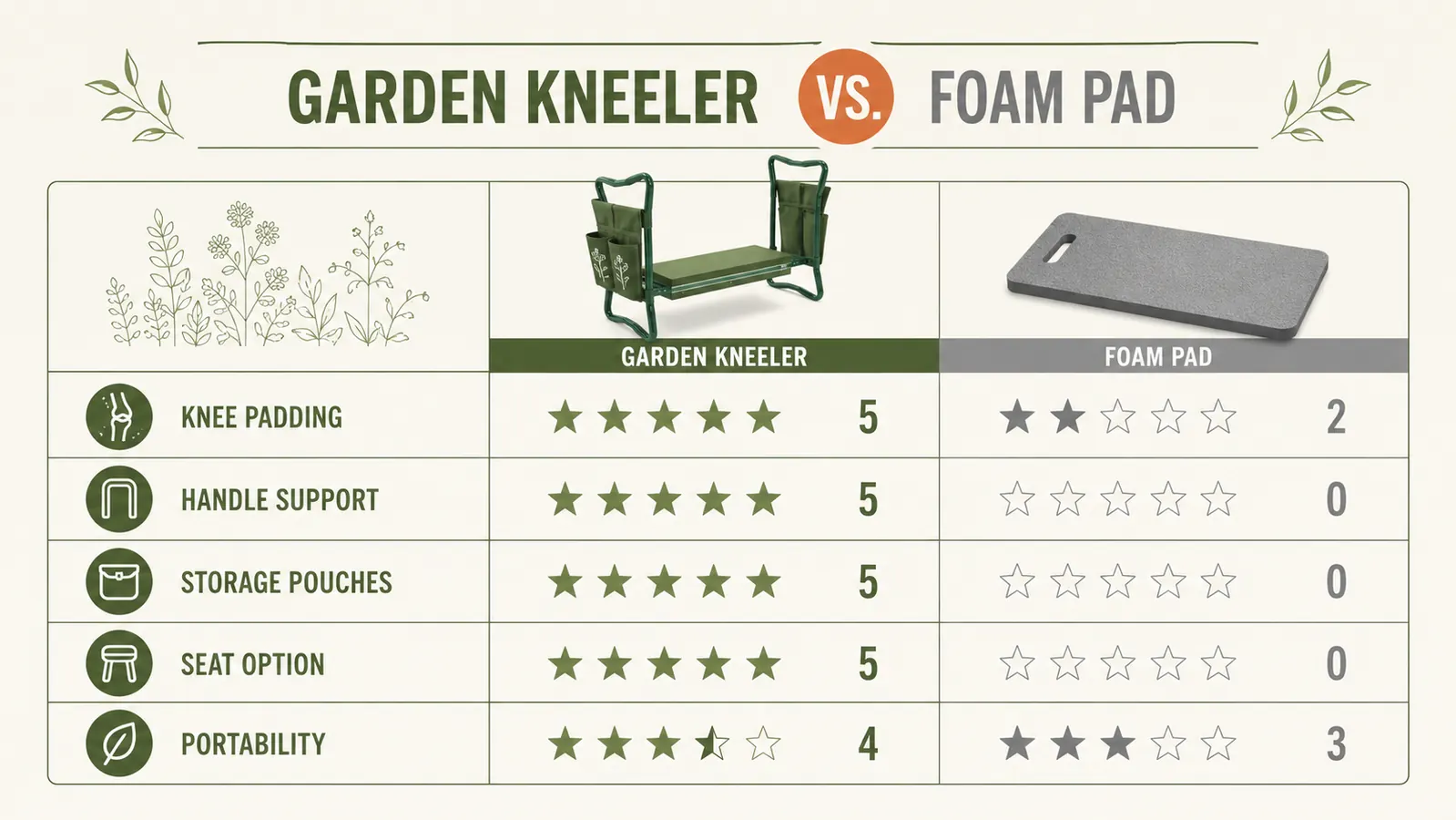
Where the Foam Pad Wins: Weight, Simplicity, and Price
Let me give the foam pad its honest due, because I do not think the TomCare is the right choice for every situation. If you do light container gardening on a patio, spend ten minutes at a time near your pots, and never have to get back up from deep ground-level beds, a foam pad is genuinely adequate. It weighs almost nothing. It stores in a kitchen drawer or a coat closet. It does not require any folding or carrying. You set it down, kneel for a few minutes, stand back up, rinse it off with the hose.
The foam pad is also better for travel situations, if you ever take your tools to help a family member with their beds or work at a community garden plot. It fits flat in a tote bag and costs almost nothing if it gets left behind. The TomCare is not a burden to carry across a backyard, but it is 4.4 pounds and the size of a folded camp chair. You will notice it in your hands. For anything requiring more than one trip across a parking lot, the foam pad wins on portability, full stop.
There is also something to be said for a tool that requires no setup and no thinking. You grab it, you kneel, you stand. The TomCare has a small learning curve the first few times you flip it between modes and fold it to move it across the yard. It is not complicated, but it is more complex than a flat piece of foam. If garden prep already feels like too many steps, the simplicity of the foam pad has real value for some people.
Six years of cheap foam pads, replaced every spring. One TomCare, going on its second season without a scratch. Sometimes the math on cheap tools works against you.
Where the Foam Pad Fails: Thin Padding, Short Lifespan, and the Getting-Up Problem
The core problem with foam kneeling pads is that the cheap ones are thin. Most of the budget options are an inch to an inch and a half of EVA foam. On soft raised-bed soil, that is passable padding for a short session. On clay-hardpack, gravel path edges, or a stone patio, it is close to useless. The foam compresses under your weight within a few minutes and you end up feeling every pebble and root. The TomCare's kneeling surface is 10.64 inches wide and backed by a rigid steel frame, which distributes your weight across a larger, more structured surface. It does not bottom out.
Durability is the other quiet failure of foam pads. I have split two of them by kneeling at the edge. I have had one crack through a winter when I left it in the unheated shed. I have had one absorb enough moisture from a wet spring that it never fully dried and started to smell musty. The TomCare's frame is powder-coated steel with an Oxford-fabric seat. It does not absorb water, it does not crack, and it does not split. After eighteen months it looks nearly the same as when I opened the box. The foam pads from those same eighteen months are in a landfill somewhere.
The getting-up problem is real and it compounds over time. When you are twenty-five, pushing yourself off the ground is not something you think about. When you are gardening regularly in your forties, fifties, or sixties, the transition from kneeling to standing becomes its own small project. A foam pad leaves you to solve this problem with no assistance. The TomCare treats it as a basic design requirement and gives you two padded handles to push from. That is not a luxury feature for the infirm. It is just a sensible piece of engineering that most people with any joint awareness should have had years ago.
Who Should Buy Which
Buy the TomCare if you garden on your knees for more than twenty minutes at a stretch, have any existing knee or lower-back tenderness, work in ground-level beds rather than just raised beds or containers, or want one tool that handles both kneeling and low seated work through a full season. The 4.6-star average across more than 14,316 Amazon reviews reflects real use by real gardeners, not a paid promotional blitz. Most people who buy this stop buying foam pads. It pays for itself in the first season for anyone doing regular ground-level garden work.
Stick with a foam pad if you do only light container or patio gardening, garden infrequently (once every few weeks for short sessions), have no discomfort getting up from the ground, and really just need something to keep your pants clean. For that use case, a budget foam pad is proportionate to the task and there is no shame in using it. Not every tool purchase needs to be an upgrade.
If you are genuinely on the fence, ask yourself one question: in the last gardening season, did you ever push off the bare ground or your own thigh with your hands to stand up after kneeling? If the answer is yes, the TomCare's handles alone are worth the price difference over what you would spend replacing foam pads over the next three years. The rest of the features are a good bonus, and if you want more detail on how it holds up through a full growing season, the long-term review covers a year of daily use.
14,316 gardeners made the switch from foam pads. Check today's price on the TomCare before you buy another one.
The TomCare Garden Kneeler and Seat converts from kneeling pad to low bench in seconds, includes two zippered tool pouches, and supports up to 330 lbs. Rated 4.6 stars on Amazon. Check current pricing and Prime availability below.
Amazon Check Today's Price on Amazon →