
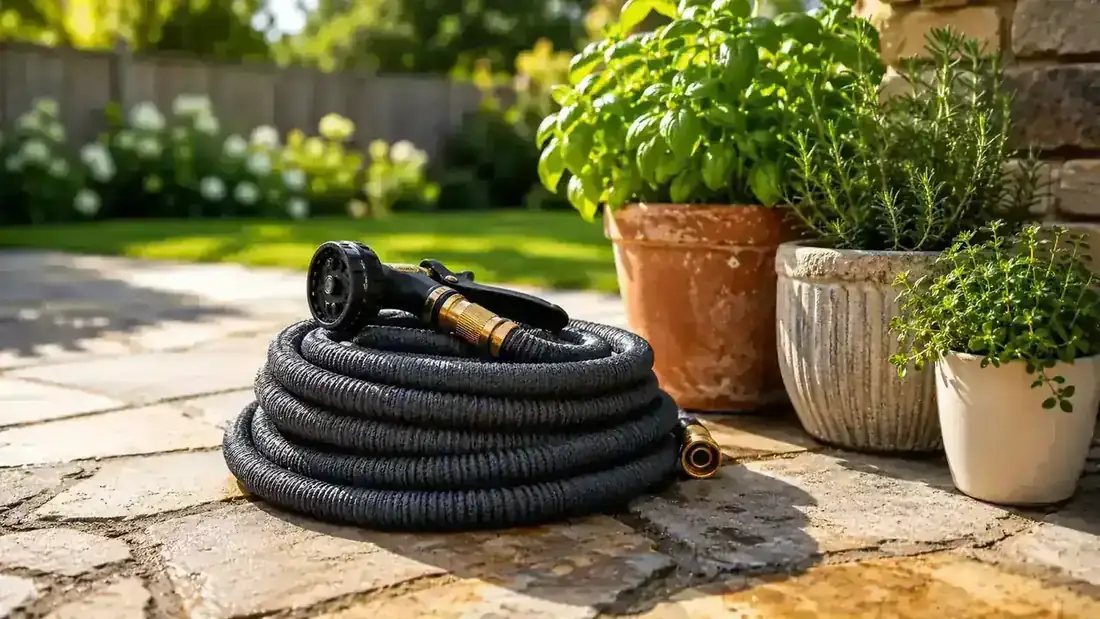
I am going to tell you something embarrassing. For six years I owned a standard 50-foot rubber garden hose that weighed about as much as a golden retriever puppy. Every time I needed to water the back beds I had to drag the thing off its hose reel, wrestle it around the corner of the raised beds without kinking it, and then coil it back up by hand when I was done. My shoulder was not thrilled. My knees were less thrilled. And every single spring I would find a new crack somewhere near a fitting and spend twenty minutes at the hardware store trying to remember what size repair sleeve I needed. So when a friend suggested I try the Flexi Hose 50FT expandable garden hose, I was skeptical but tired enough to try anything.
I bought the Flexi Hose in late spring of my first test season. I am now two full growing seasons in, and I have watered vegetable beds, flower borders, a small lawn patch, two container gardens on the back porch, and one very ungrateful hedge with this thing. Here is my honest, nothing-left-out account of how it performed.
The Quick Verdict
A genuinely lighter, kink-free alternative to rubber hoses that earns its keep for most home gardens, though the outer fabric shell needs some care to go the distance.
Amazon Check Today's Price →Done wrestling a hose that weighs more than your watering can?
The Flexi Hose 50FT has over 26,000 Amazon reviews and expands from a compact 17 feet to a full 50 when the water is on. Check today's price before you drag that old rubber hose out one more time.
Amazon Check Today's Price on Amazon →How I've Used It
My garden setup is a quarter-acre suburban lot with a mix of clay and sandy loam, a spigot on the north side of the house, and a second one on the back porch. My beds run about 40 feet from the nearest spigot at their farthest point, so a 50-foot hose is the minimum I can work with. Before the Flexi Hose, I kept two rubber hoses because I could not reach everything with one without dragging extra length across the lawn and hoping the dog did not chew the connector.
With the Flexi Hose, I attached it once to the north spigot and left it there. I use it morning or evening, roughly five days a week from late April through early October. In my first season that was about 130 watering sessions, each running ten to twenty minutes. Season two was a drier summer and I probably ran it more like 160 sessions. That is a lot of expand-contract cycles for a hose with a fabric shell and a latex inner tube.
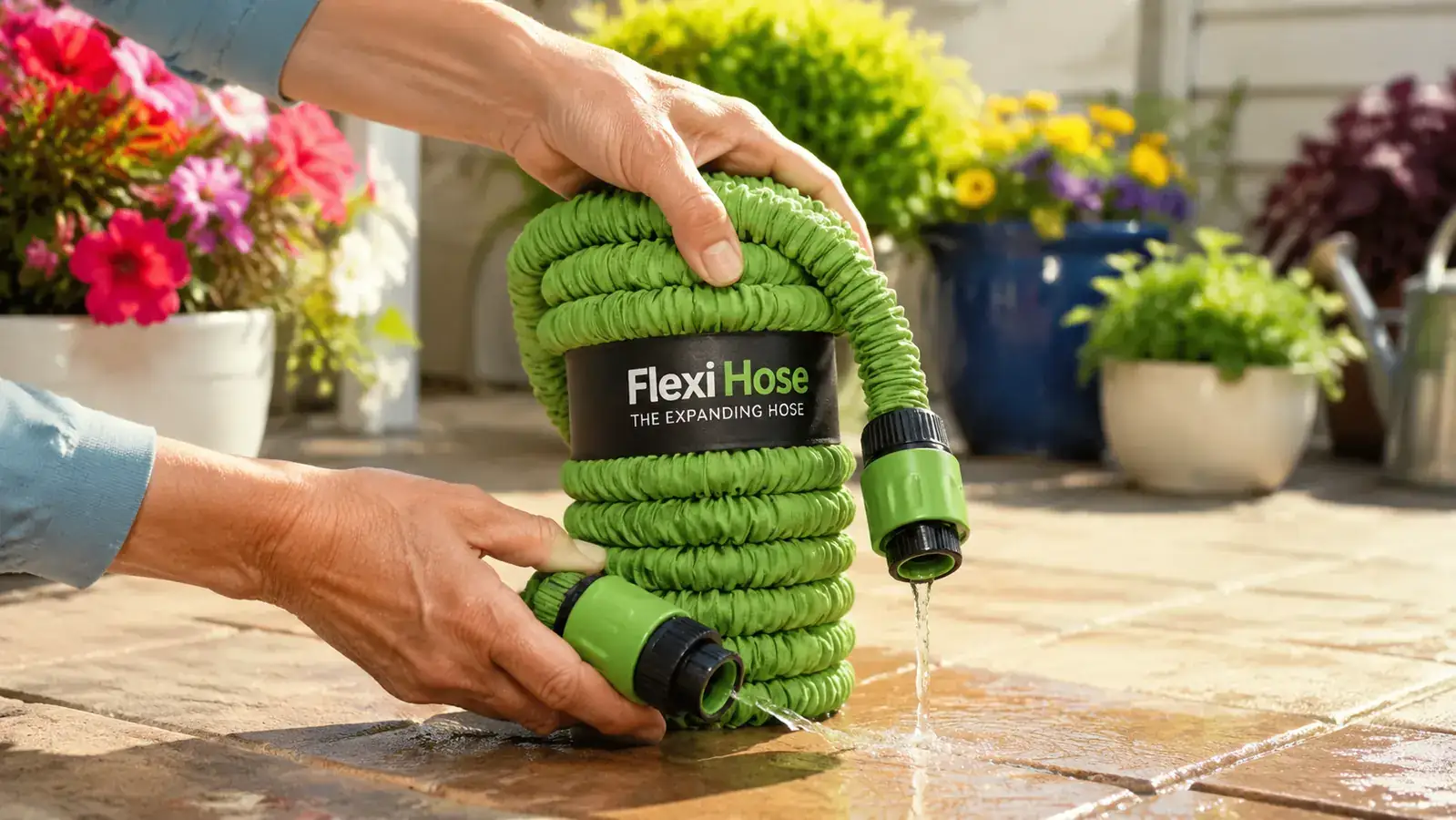
Setup is fast. You screw the brass fitting onto the spigot, turn on the water, and watch the hose grow from a bundled 17 feet to its full 50 in about thirty seconds. Turn off the water and it drains and contracts on its own over another minute or two. No coiling. No wrestling. No reel. I will be honest, the first time it expanded I laughed out loud in my backyard like a weirdo.
Lightweight Design and Storage
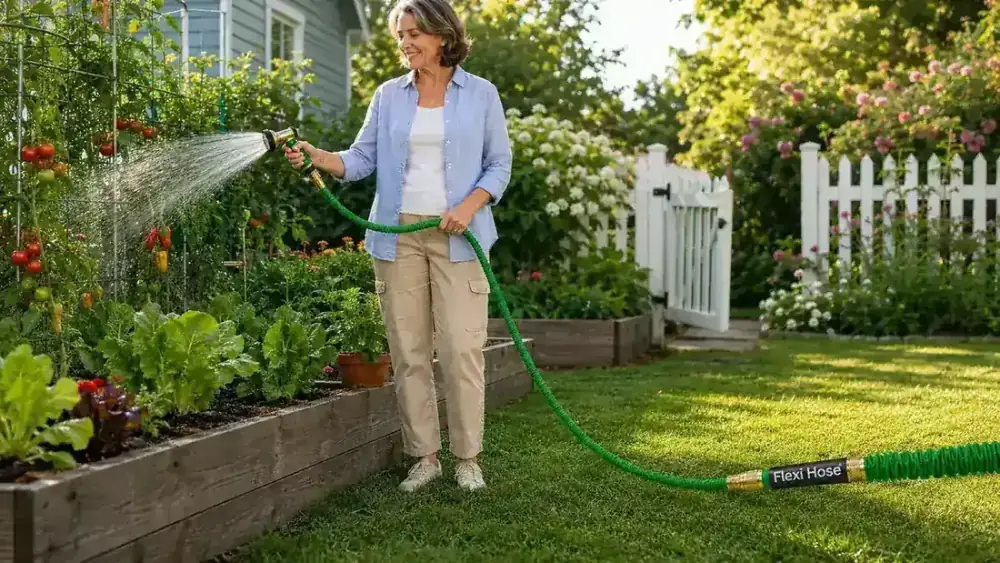
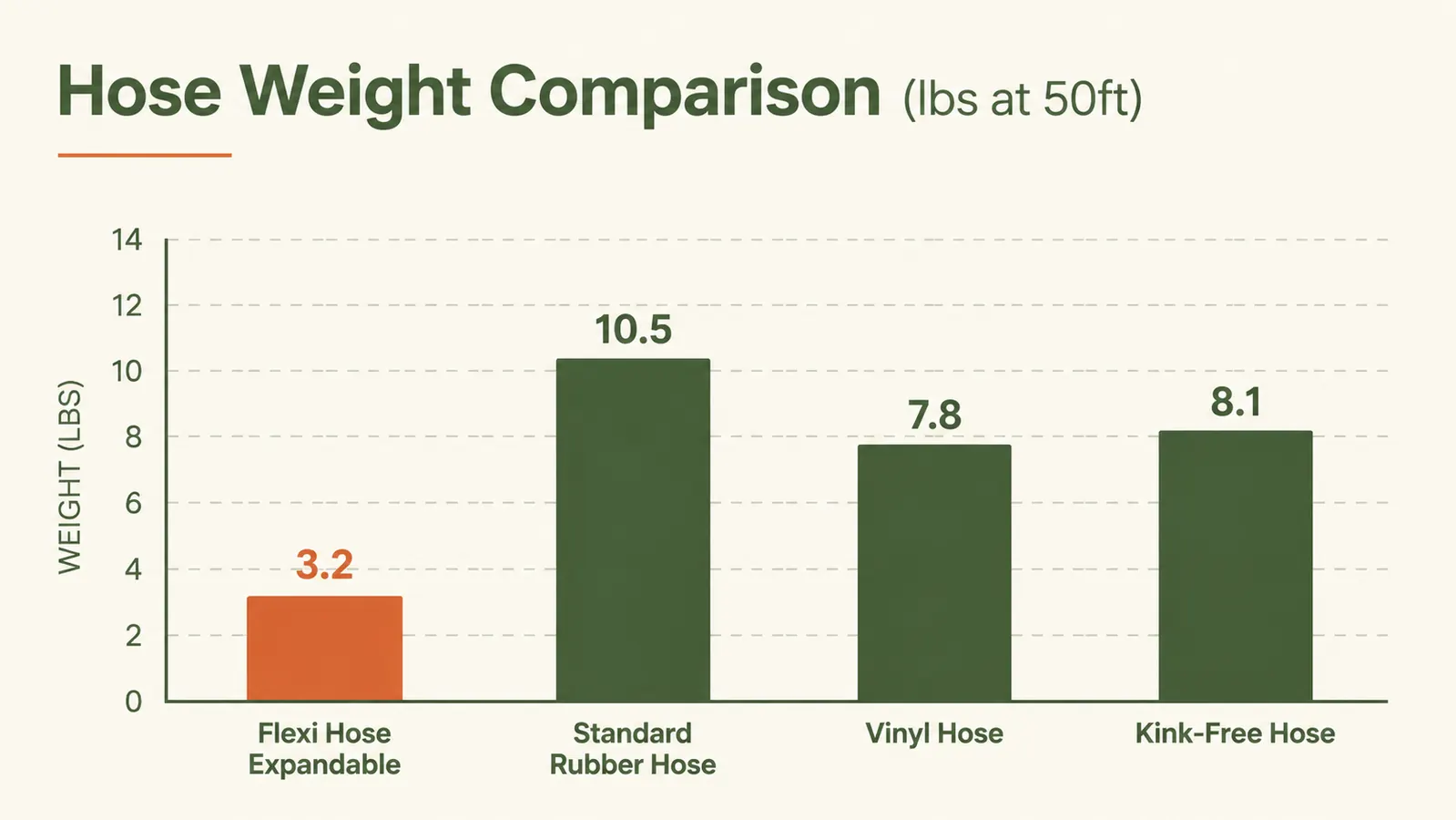
The weight difference between this hose and my old rubber one is not subtle. The Flexi Hose weighs about 2.5 pounds when empty. My old rubber hose weighed closer to 14 pounds full of water. If you have ever dealt with sore shoulders, bad knees, or just do not love manhandling a fat rubber tube around a garden bed, that difference matters every single day. I can carry this hose with two fingers when it is contracted. I hang it on a simple hook on the fence post. No hose reel, no hooks and eyes, no drama.
Storage is what sealed the deal for me after the first month. When summer ended I simply drained the hose by turning off the spigot and letting it contract, then hung it inside the garage on a peg. It took up about as much space as a gym bag. My old rubber hose needed its own dedicated wall-mount reel and still managed to leave a puddle on the garage floor every fall.
One practical note on the contraction: the hose does not fully drain on its own if your spigot sits at an angle or your yard has a slope that pools the far end lower than the fitting. You may need to lift the far end and walk it back toward the spigot to coax the last bit of water out. Not a deal-breaker, just something to know going into winter storage so you do not leave water sitting in the latex tube and risk a split.
No-Kink Performance in the Real World
Kinking is where most hoses earn my frustration, and I am happy to report the Flexi Hose is the best kink performer I have used in this price range. When the hose is under pressure and fully expanded, it does not kink at corners. I can loop it around the edge of my raised beds, drape it over a garden stake, and leave it on the brick path without any kinks forming while the water is running. The latex inner tube inside the woven polyester outer shell stays flexible enough to bend without collapsing.
The caveat: do not step on it. If you stand directly on the hose while the water is off and the hose is contracted, you can flatten the inner tube at that spot, and when it expands under pressure it will bulge slightly at the pinch point. It has never burst for me there, but I have had two small spots on the outer fabric that now look a little puffier than the rest of the hose after a foot traffic incident. Keep it out of the pathway when you are not actively using it and this is not an issue.
The first time it expanded I laughed out loud in my backyard like a weirdo. After six years of wrestling a 14-pound rubber hose, watching this thing grow to 50 feet on its own was genuinely satisfying.
Fittings, Connectors, and the Pressure Question
The Flexi Hose comes with solid brass fittings on both ends, and I consider that the single most important quality feature on the entire product. I have owned expandable hoses with plastic connectors that cracked by midsummer when the sun hit them repeatedly at maximum water pressure. Brass does not crack. Brass threads smoothly. Brass does not warp under heat. If you see an expandable hose with plastic fittings, walk away.
Standard household water pressure runs 40 to 80 PSI. The Flexi Hose is rated to handle that range without issue. My spigot runs around 60 PSI and the hose has never given me trouble at that pressure over two seasons. I did not stress-test it at 80 PSI because I do not need to, and that is not what a home garden hose is for. Where some reviewers have reported leaks, it has almost always been at the connection point, and in my experience that is a threading issue, not a hose quality issue. Wrap the fitting threads once with plumber's tape before you attach to the spigot and I have not seen a single drip in two seasons.
The hose comes with a spray nozzle included. It is a basic eight-pattern plastic nozzle and it does the job. I used it for half a season before swapping it for a heavier brass nozzle I already owned. The included nozzle is fine as a starting point. If you water containers or seedlings regularly, you will probably want a gentler misting nozzle than what comes in the box.

How the Outer Fabric Shell Holds Up Over Time
This is the section I wish I had read before buying, so I am going to be thorough. The outer shell is a woven polyester sleeve, similar in feel to a nylon gear bag. It is tougher than it looks, but it is not indestructible. After two seasons my shell has a few minor scuffs where it dragged across a rough concrete path and two small threads that pulled loose where the hose bent sharply around a garden bed corner. Neither has caused any actual problem with the hose function. But it is fair to say the shell shows more wear than a rubber hose would after the same period.
The inner latex tube is the part that actually holds the water, and the tube is what you are protecting when you take care of the shell. In my climate (hot, humid summers, UV exposure from May through September), the outer fabric does protect the latex from direct sun exposure, which matters. Bare latex degrades faster under UV than most people expect. As long as you are not dragging the hose over sharp gravel or leaving it kinked under pressure, the shell should hold up well through at least two seasons. After two seasons I would call mine maybe 80 percent of where it started, cosmetically speaking. Function is still 100 percent.
The Flexi Hose has a rated lifespan claim on the packaging that I will not repeat because I cannot verify it from personal use. What I can tell you is that it survived two hard-use seasons with no leaks, no burst connections, and no inner tube failure. That is better than two of the three rubber hoses I owned before it, and both of those were more expensive.
Alternatives I Considered Along the Way
Halfway through my first season I borrowed my neighbor's Pocket Hose to compare. The Pocket Hose is a popular expandable competitor and it felt noticeably thinner in the hand, with plastic fittings that already felt loose after one season of her use. I am not saying Pocket Hose is bad across the board, but in that side-by-side the Flexi Hose's brass fittings and thicker outer shell clearly had more going for them.
I also considered going back to a standard rubber hose after my first season, just to have something I could stomp on and not worry about. But the daily convenience of not coiling, not reeling, and not having a heavy tube to drag honestly kept me in the expandable camp. If you want a head-to-head breakdown of expandable versus standard rubber hoses by use case, check out our Flexi Hose vs Regular Garden Hose comparison. And if you are curious about the specific ways an expandable design changes your daily watering routine, we laid those out in 10 Reasons an Expandable Garden Hose Beats a Standard Hose.
What I Liked
- Weighs about 2.5 pounds empty, a massive drop from rubber hoses in the same length
- Solid brass fittings on both ends, no plastic cracking or threading issues
- Genuinely kink-free under pressure when the hose is fully expanded
- Self-draining when you turn off the spigot, which makes seasonal storage simple
- Contracts to a fraction of its full length so it hangs on a single hook with no reel
- Included nozzle is decent enough to get started, comes ready to use out of the box
Where It Falls Short
- Outer fabric shell shows scuffs and minor wear after two seasons of hard use
- Does not fully self-drain on sloped ground, you may need to coax the last bit out manually
- Stepping on the hose while contracted can create a pressure bulge when expanded
- Included spray nozzle is plastic and basic, most dedicated gardeners will want to upgrade it
- Rating of 4.1 stars (not 4.5+) suggests a subset of buyers has had durability issues, likely tied to pressure or kink misuse
Who This Is For
The Flexi Hose 50FT is a strong fit if you have a small to medium home garden (under 2,000 square feet of watering zone), you are watering from a single standard residential spigot, and you want to stop managing a heavy rubber hose every single morning. It is especially good if you have any shoulder, wrist, or knee issues that make wrestling a dense rubber hose unpleasant. It is also the right pick if storage space is tight and you do not have room for a mounted hose reel.
The 26,827 Amazon reviews at a 4.1 star average tell an honest story: most buyers are happy, a meaningful minority have had issues. In almost every critical review I read, the problem was either a pressure spike above residential range or a kink that was left under pressure. Both are user-side situations this hose is not designed to handle. Treat it like a garden hose and not like a pressure washer feed line and you will be in the happy majority.
Who Should Skip It
Skip the Flexi Hose if you need to run it at high water pressure for extended periods, if your garden setup requires you to leave the hose under pressure while fully kinked around a corner, or if you need something you can drag over rough gravel paths daily without a care in the world. If you have a large property where 50 feet is not nearly enough, you would need to add a connector and a second hose, and that introduces a leak point that is not worth the hassle. A heavy-duty rubber hose or a professional-grade soaker system is a better fit for those scenarios.
I would also pause if you are the kind of gardener who drops the hose and walks away regularly without coiling it back, leaving it in direct sun on a concrete driveway all afternoon. The Flexi Hose can handle some UV exposure through the outer fabric, but it is not a set-it-and-forget-it rubber hose. A little basic care goes a long way toward getting three or more seasons out of it.
Two seasons in, I would buy it again without hesitating.
The Flexi Hose 50FT expandable garden hose with brass fittings is on Amazon with more than 26,000 reviews. Check today's price and see what current buyers are saying about durability.
Amazon Check Today's Price on Amazon →